HEAD Squared Tennis Racket 2026
Overview
The HEAD Squared tennis racket 2026 is a 295g graphite frame built around an entirely new construction method: Dual Tube technology. It is the most head-light racket HEAD has ever produced, with a 295mm balance point and a strung swing weight of around 298. Developed over an 11-year R&D process, it combines a Torayca T800S carbon outer tube for power with a foam-filled inner comfort tube to reduce arm fatigue.
Pick it up and the balance is immediately striking. The grip end feels noticeably heavier than the hoop, which makes the frame whip through the hitting zone with very little effort. That 295mm balance point sits well below the 315 to 330mm range of most modern rackets. On court, it means faster swing preparation and a very easy acceleration through contact. Players who have struggled to generate pace will notice the difference from the first rally.
This is not a cosmetic update to an existing HEAD line. The Squared sits in its own category and represents a genuine shift in how a performance tennis racket is engineered. Players at beginner and intermediate level, club doubles players, and anyone managing arm discomfort will all find something real in this frame. It was launched on 9 April 2026 and has already drawn strong responses from reviewers for its unusual combination of comfort and acceleration.
Key Features
- Dual Tube construction: Two separate tubes run through the frame instead of one. The outer Torayca T800S carbon tube handles power and frame stability. The inner foam-filled tube absorbs vibration before it reaches your arm. This splits the jobs of power and comfort across two structures rather than asking one material to do both.
- 295mm ultra head-light balance: The most head-light balance point of any HEAD production racket. At 295mm, it sits 20 to 35mm lighter in the head than most modern frames. The result is effortless acceleration through the contact zone, particularly useful on reaction volleys and service returns.
- Strung swing weight of approximately 298: One of the lowest strung swing weights on the current market. The HEAD Speed MP 2026 sits at around 325 strung for context. A lower swing weight reduces the physical load on your arm during longer sessions and makes the racket far easier to manoeuvre at pace.
- 16x18 open string pattern: HEAD's most powerful string pattern on this frame. The open layout increases string movement at contact, giving more spin potential and a higher launch angle. It also enlarges the effective sweet spot compared to denser 16x19 or 18x20 patterns.
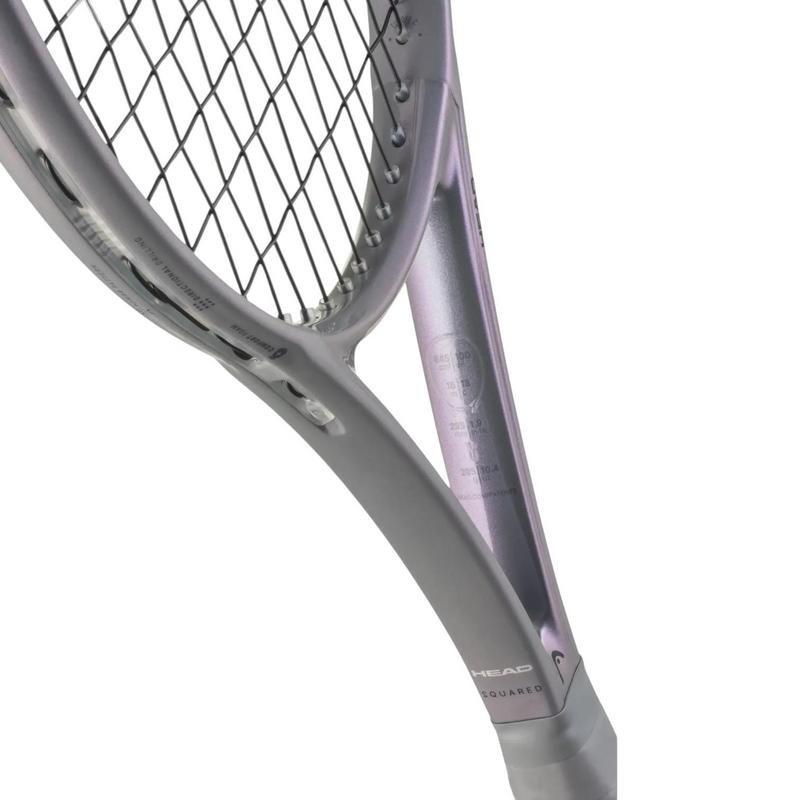
- Directional drilling: Grommet holes are drilled at a specific angle rather than straight through the frame. This promotes cleaner string movement at impact, delivering a crisper feel and additional spin-friendliness from the same string bed.
- Torayca T800S carbon fibre outer tube: T800S is a premium aerospace-grade carbon fibre made by Toray. It is also used in higher-end performance rackets across the industry. Its high tensile strength keeps the outer tube stable under the load of powerful groundstrokes without adding weight.
- Proven to reduce muscle activity: HEAD conducted testing showing the Squared reduces muscle activity during swings. That translates to less arm fatigue over the course of a match, which is a meaningful advantage for club players who play multiple times a week and for teaching professionals who hit for hours on court.
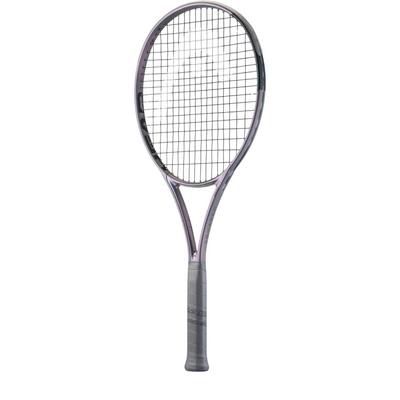
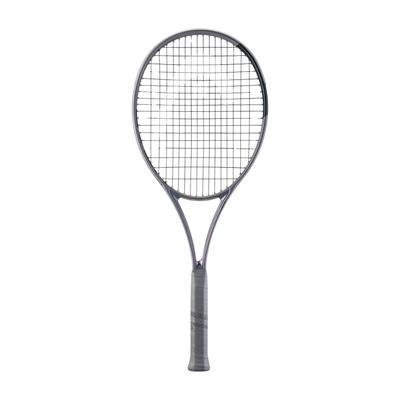
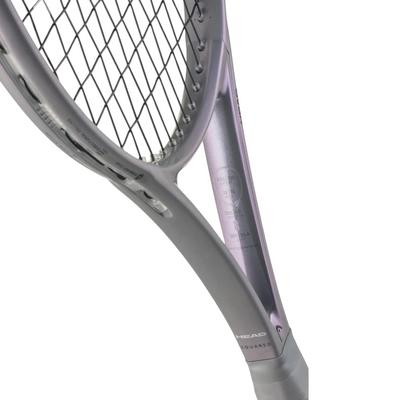
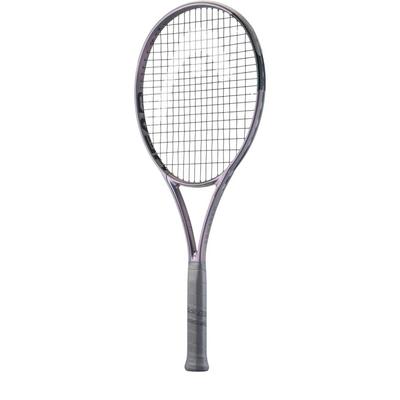
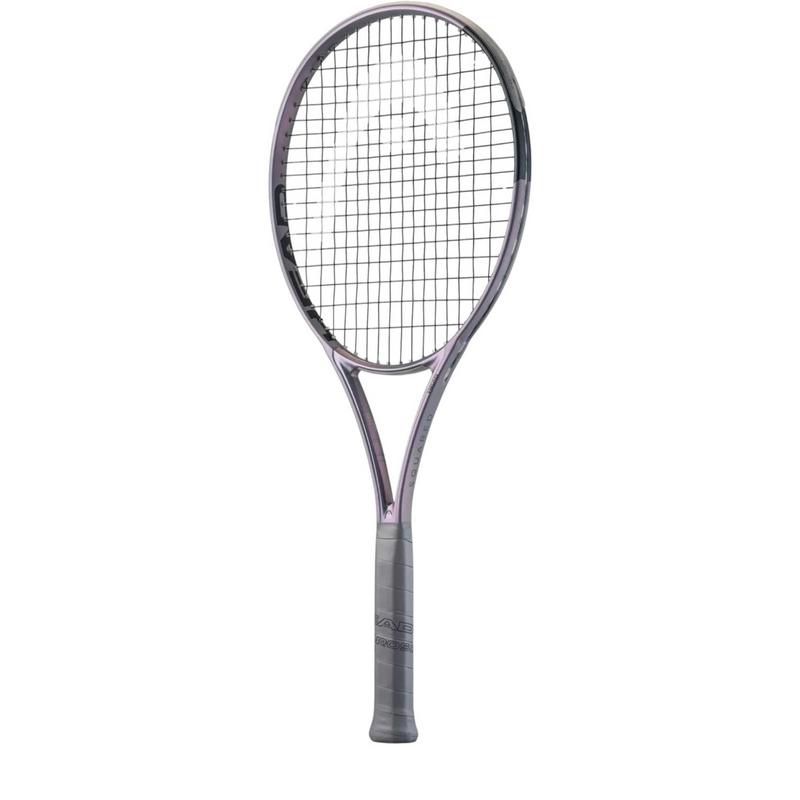
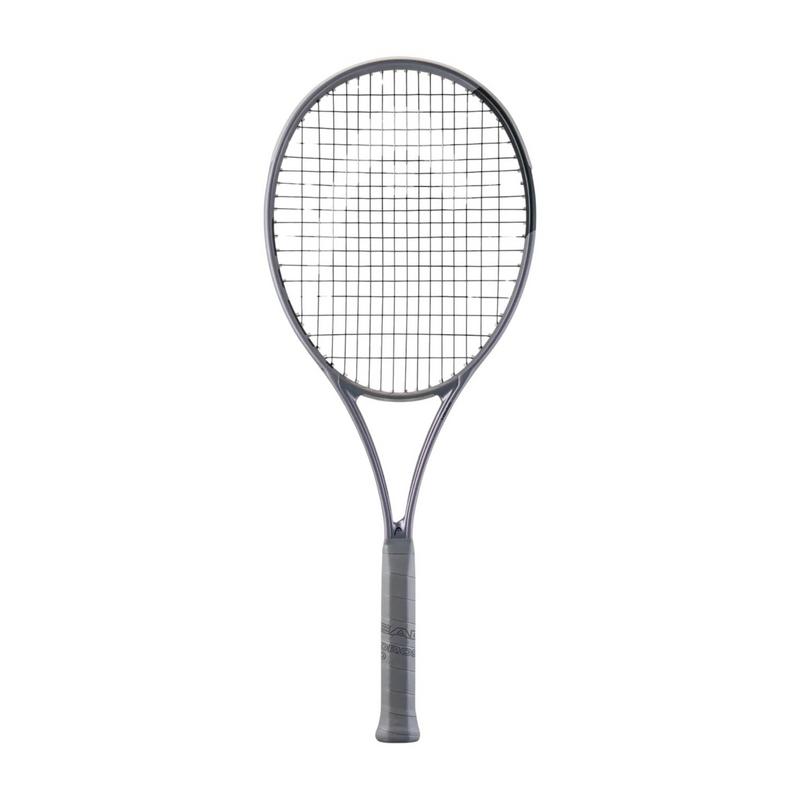
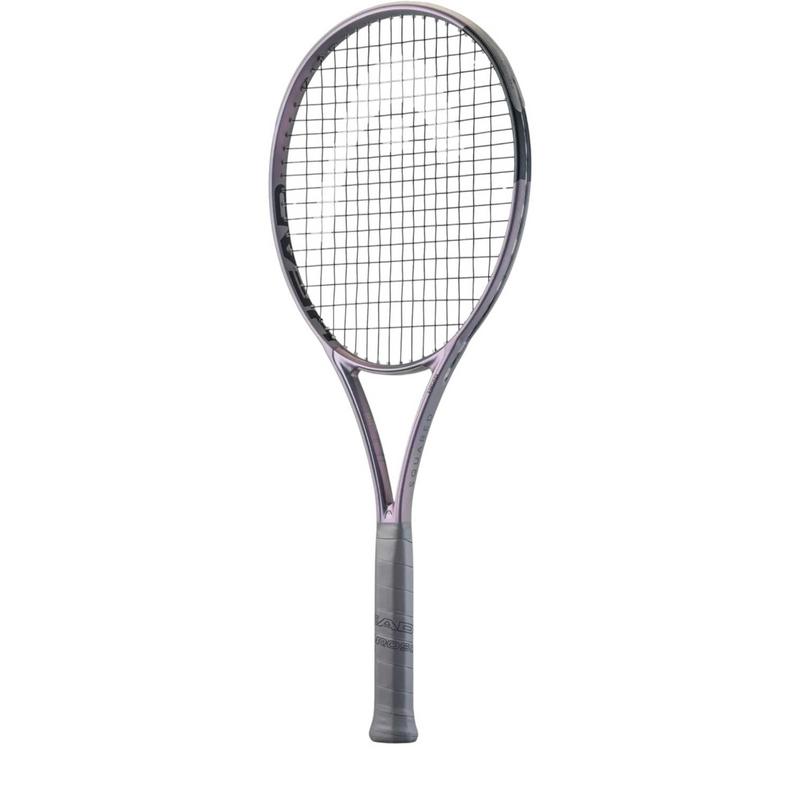
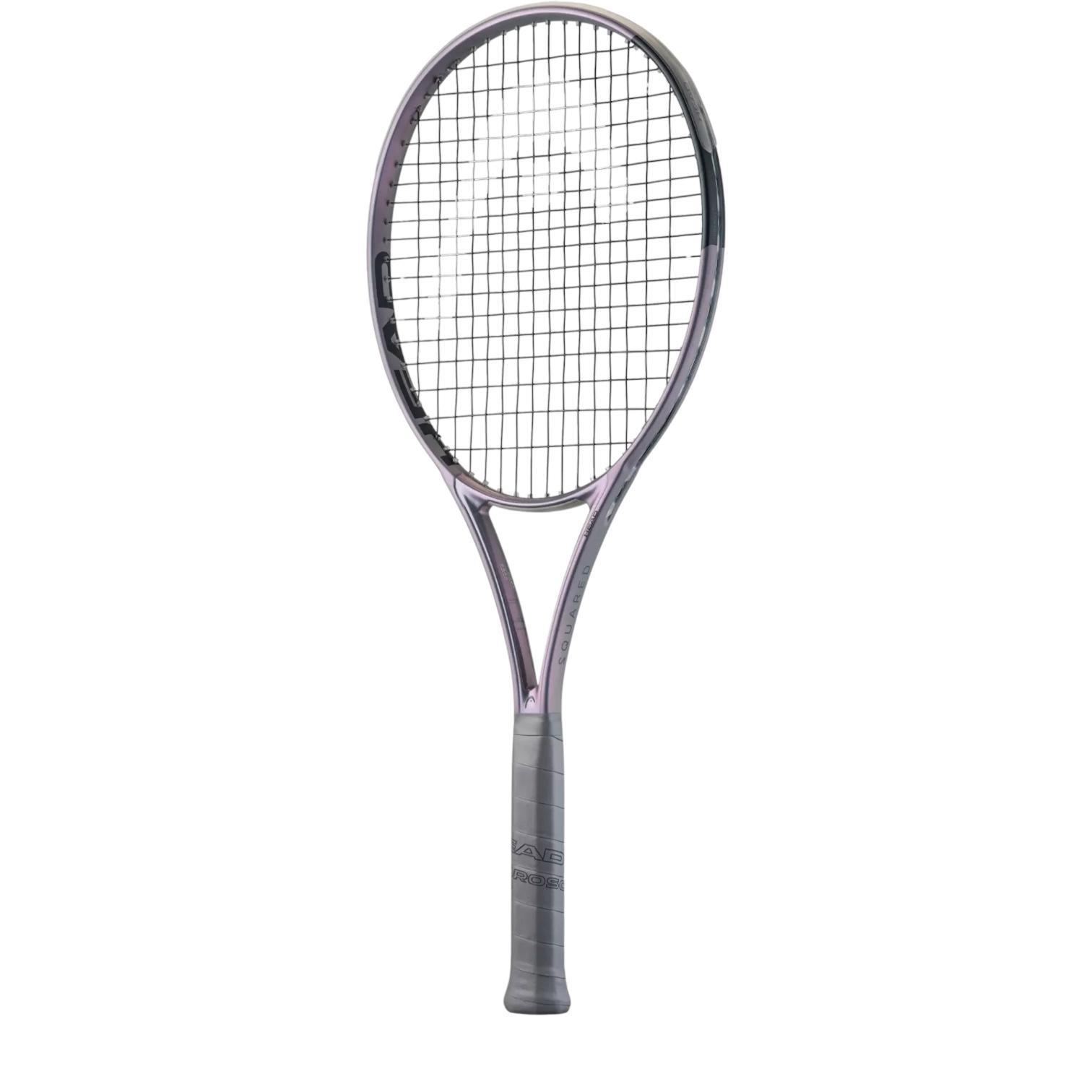
- Hologram finish with matte grey cosmetic: The frame uses a matte grey outer tube inspired by automotive and cycling design. A hologram layer shifts between magenta and teal depending on the light. The inner tube has a contrasting finish visible through the frame structure.
Design and Materials
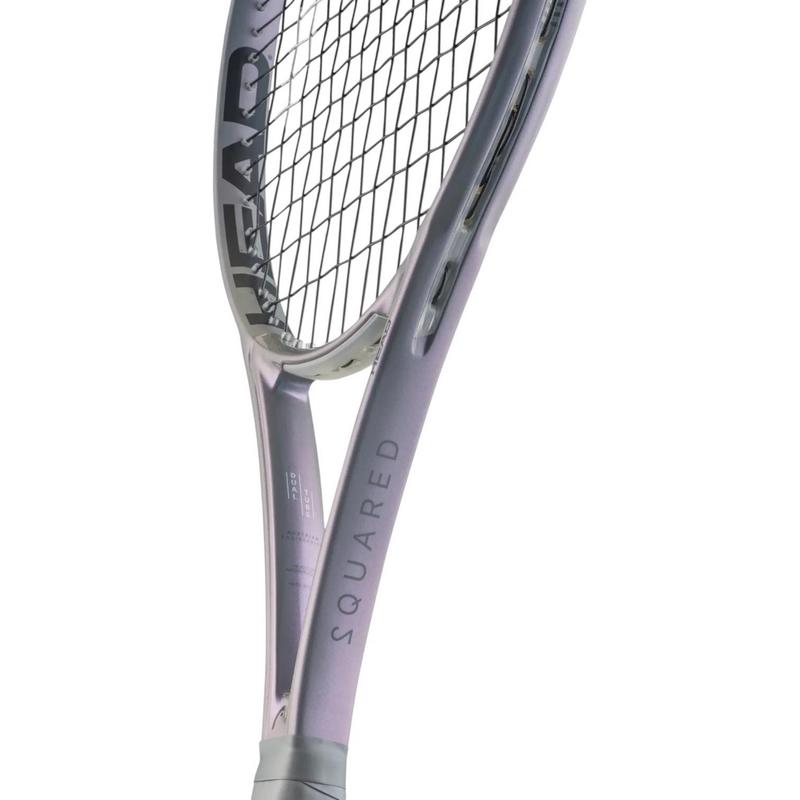
The outer tube of the Squared is built from Torayca T800S carbon fibre. In hand, the matte grey finish feels dense and quality. The hologram effect on the frame is subtle in flat light and more visible in direct sunlight, shifting between magenta and teal. HEAD's signature asymmetric moulding is built into the frame geometry. The 23/25/24mm beam width tapers through the throat and tip, keeping the profile slim enough for good aerodynamics through the swing while maintaining structural stiffness where the ball contacts the string bed.
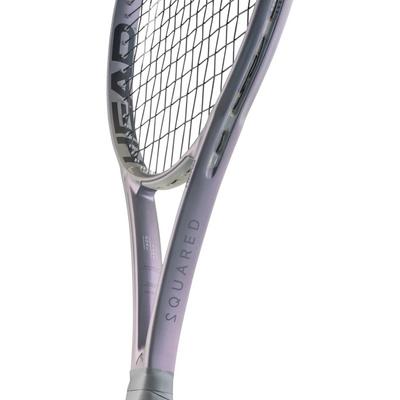
The inner comfort tube connects the butt cap directly to the main string bed. This is the structural detail that gives the Squared its distinctive feel. Vibration from the string bed travels into the comfort tube and is absorbed by the foam fill before it can travel down the shaft and into the handle. The strung stiffness of 60 to 61 RA puts the frame in genuinely flexible territory on paper, though reviewers note the Dual Tube design delivers a softer playing feel than that RA number alone would suggest. The overall build quality is consistent with HEAD's premium graphite racket range.
Key Technologies
Dual Tube Technology: Two tubes replace the single tube found in every other production racket. The outer T800S carbon tube provides power and frame stability. The inner tube is foam-filled and runs from the grip up to the main string bed. It absorbs vibration at the source, reducing the shock that reaches your arm. HEAD spent 11 years developing this construction method.
Torayca T800S Carbon Fibre: The outer tube is made from T800S, a premium carbon fibre produced by Toray for aerospace and high-performance sporting applications. Its tensile strength gives the outer tube rigidity under load, so energy at impact is transferred efficiently into the ball rather than being lost in frame flex.
Directional Drilling: Grommets are drilled at a set angle into the frame rather than perpendicular to it. This guides each string toward a preferred movement direction at contact. The effect is a crisper, more directional response from the string bed and increased spin-friendliness without changing the string pattern layout.
Ultra Head-Light Balance: The 295mm balance point is the lowest HEAD has ever put into a production frame. By shifting weight away from the hoop and toward the handle, the racket generates a swing weight of approximately 298 strung. This makes the frame dramatically easier to accelerate and control on volleys and returns without the player needing to generate their own momentum.
Specifications
| Specification | Details |
|---|
| Head Size |
100 sq in / 645 cm² |
| Length |
685 mm / 27.0 in |
| Unstrung Weight |
295g / 10.4 oz |
| Balance (unstrung) |
295mm / approx. 15pts head-light |
| Strung Swing Weight |
~298 |
| String Pattern |
16x18 |
| Stiffness (RA strung) |
60 to 61 |
| Beam Width |
23 / 25 / 24 mm |
| Frame Composition |
Torayca T800S carbon fibre (outer tube) / Foam comfort tube (inner) |
| Construction |
Dual Tube Technology |
| Available Grip Sizes |
L1 (4 1/8), L2 (4 1/4), L3 (4 3/8) |
| Finish |
Matte grey with magenta-to-teal hologram effect |
VKS Review
The HEAD Squared tennis racket is one of the most genuinely different frames to arrive in 2026. From the moment you pick it up, the ultra head-light balance sets it apart. That 295mm balance point is not a small tweak. It is a structural choice that changes how the racket moves through your swing. The whip through contact is immediate and very easy to generate, even at modest swing speeds. On groundstrokes, the open 16x18 pattern and the directional drilling combine to give the string bed a lively, spin-friendly response. On volleys, the low swing weight means you can redirect the ball quickly with very little preparation time. Players who have felt sluggish on reaction shots with heavier frames will notice a real difference here.
The honest trade-off is that the low swing weight means less mass behind the ball on heavy-paced rallies. Advanced players who rely on heavy ball weight from their groundstrokes may find the Squared lacks the depth they want from the baseline. But that is not who this racket is built for. It is the right frame for improving club players, recreational players who want more from their game without fighting the racket, doubles specialists, and players managing arm issues. The foam comfort tube does a quiet but effective job. There is no sharp vibration on mishits, which makes long sessions noticeably less tiring. For teaching professionals who hit for hours, it is one of the most sensible choices currently available. Our London team in Ealing can help you compare Squared against alternatives and advise on the best string setup. VKS offers a same-day restringing service, so you can have this frame set up exactly as you want it before you leave the store.
Q&A Section
What is Dual Tube Technology in the HEAD Squared racket?
Dual Tube Technology means the frame is built around two separate tubes instead of the single tube used in every other production racket. The outer tube is made from Torayca T800S carbon fibre and provides power and stability on contact. The inner tube is filled with comfort foam and runs from the grip up to the main string bed, absorbing vibration before it can reach your arm. HEAD developed this construction over 11 years to separate the jobs of power and comfort, which previously required a trade-off in single-tube frame design.
Is the HEAD Squared suitable for players with tennis elbow or arm pain?
Yes, it is one of the most arm-friendly frames currently available. HEAD tested the Squared and found it reduces muscle activity during swings compared to standard single-tube frames. The foam-filled inner tube absorbs vibration at the string bed before it travels through the shaft, and the 60 to 61 RA strung stiffness keeps the frame in genuinely flexible territory. Players recovering from arm issues, or those prone to fatigue during long sessions, will notice a real difference. It will not replace medical advice if you are already in pain, but it is a strong protective choice for regular play.
Who is the HEAD Squared tennis racket designed for?
The Squared is built for beginner to intermediate players who want easy power and maximum maneuverability, recreational and club players who want to swing freely without fighting the racket, doubles players who need quick reactions at the net, and teaching professionals who need a comfortable frame for long hours on court. Advanced players who want heavy ball weight from the baseline may prefer a higher swing weight option.
Does the 16x18 string pattern give more power or more spin?
Both. The 16x18 is more open than a 16x19 or 18x20, which gives strings more room to move at contact. That increases both spin potential and launch angle. For most players this translates to easier depth on groundstrokes and more net clearance without having to swing harder. Directional drilling in the grommets adds a further spin-friendly quality by guiding string movement in a preferred direction at impact.
What strings work best in the HEAD Squared?
A multifilament or natural gut string suits most players in this frame and pairs well with its comfort-focused construction. Players who want more spin and bite can use a thin polyester string at a lower tension, around 44 to 48 lbs, which avoids making the string bed feel board-stiff. A hybrid setup with polyester mains at 46 to 48 lbs and a soft multifilament cross at 50 to 52 lbs is also a strong option. Our London store in Ealing offers same-day restringing with expert advice on the best setup for your game.
How does the HEAD Squared compare to the HEAD Speed MP 2026?
The Speed MP 2026 has a strung swing weight of around 325 compared to the Squared's 298, which makes the Speed feel significantly heavier through the hitting zone. The Speed MP suits advanced players who want more ball weight and control from the baseline. The Squared is faster to swing, easier on the arm, and better suited to players who want manoeuvrability and comfort over raw ball weight. They serve very different player profiles and are not direct substitutes for each other.
Can advanced players use the HEAD Squared?
Advanced players can use it, but they should be aware of the trade-offs. The low swing weight of approximately 298 means less mass behind the ball at high swing speeds, which can limit depth and ball weight from the baseline against strong opposition. Players who rely on physically heavy groundstrokes may find the Squared less effective for their style than a higher swing weight frame. Where it does suit advanced players is in doubles, for players managing injury, or for those who prioritise comfort and speed over baseline power.